June 5, 2026·Blog
Why Your AC Drain Line Clogs in Humid Indiana Summers
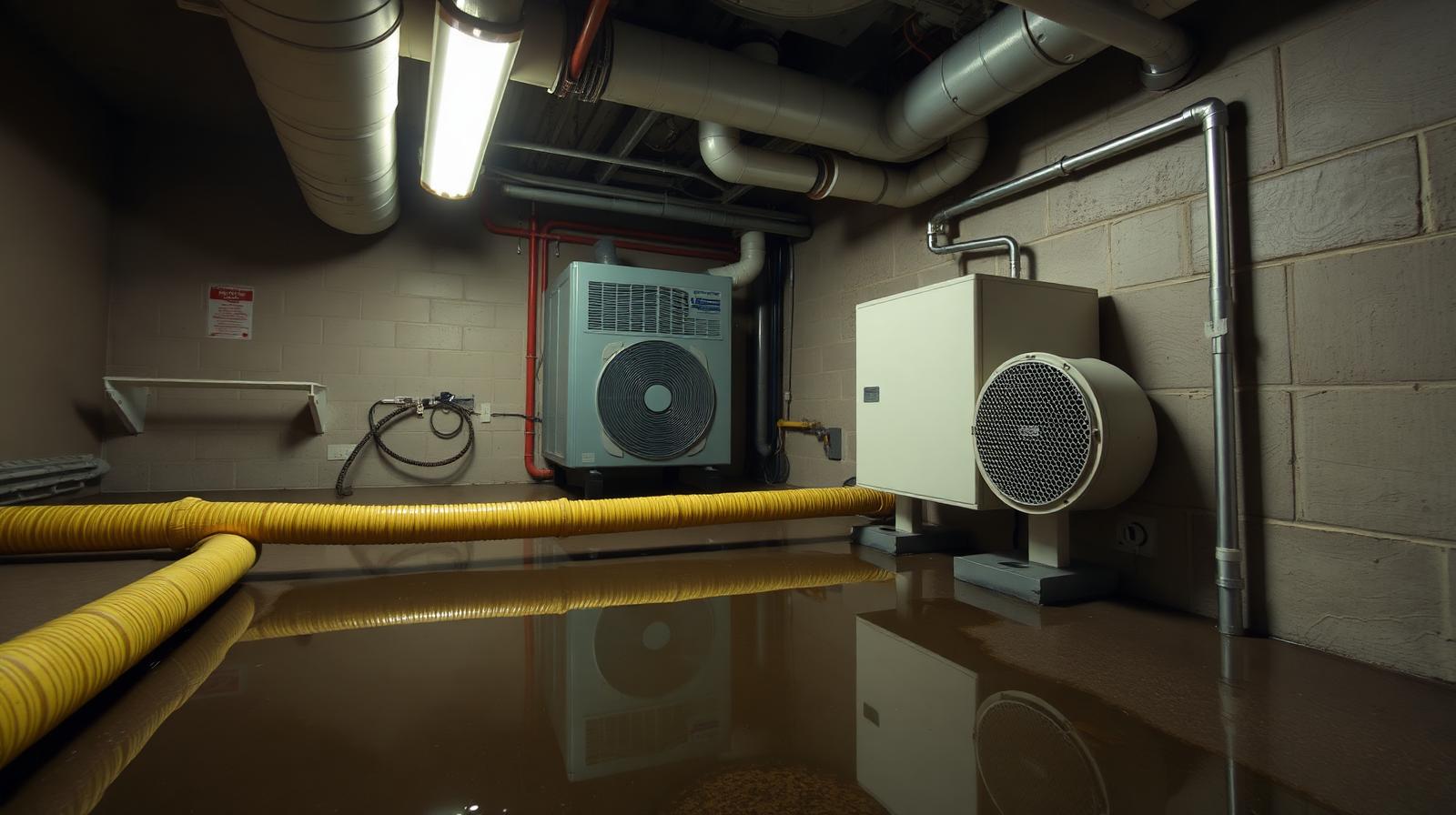
Your AC pulls a surprising amount of water out of Indiana summer air. A typical 3-ton residential system in Muncie can extract 5 to 20 gallons of condensate per day during a humid stretch. All of that water has to go somewhere. The condensate drain line is the somewhere. When it clogs, the water goes everywhere else.
How the drain line works
Cold refrigerant flowing through the evaporator coil makes the coil surface drop below the dew point of the air passing through it. Water condenses on the coil, drips off, and lands in the drain pan beneath. From there a 3/4 inch PVC drain line carries the water by gravity outside the house, or to a floor drain, or in some setups to a condensate pump that lifts it to a higher drain.
Most of the line is hidden inside walls or run through crawl spaces. You can usually see the inlet at the air handler, the cleanout tee (a vertical PVC stub with a removable cap), and the outdoor termination. Inside that line, condensate water is the perfect environment for algae and bacterial slime to grow. Slime plus dust plus the occasional dead insect equals a clog.
Signs your drain line is clogging
- Water around the air handler or in the basement near the unit
- AC shutting itself off unexpectedly (the float switch tripped)
- Wet ceiling stains directly below an attic-installed air handler
- Musty or moldy smell at the supply vents
- Drain line backing up audibly when the unit cycles on
The float switch is your friend
Most modern AC installs include a condensate float switch wired into the low-voltage circuit. If the drain pan fills past a set level, the float switch breaks the circuit and the AC turns off. This is intentional: better to lose cooling for a day than to drop a saturated ceiling into your living room.
If your AC has stopped running and the air handler sits in an attic or above living space, the very first thing to check before calling anyone is whether the drain pan has water in it. If yes, the float switch is doing its job. Empty the pan with a wet vac, check the drain outlet for blockage, and the system should resume.
Why Indiana humidity is hard on drain lines
Indiana summer dew points routinely hit the upper 60s and low 70s. That is rare-air-conditioning-territory air. The evaporator coil moves a lot of water on every run cycle, and the drain line stays continuously wet from June through August. Continuous moisture plus warm temperatures (HVAC equipment closet, attic, crawl space) is exactly what algae loves.
Homes with the air handler in a hot attic see drain line problems first because the inside of the PVC stays warmer, supporting faster algae growth. Basement-installed equipment in cooler crawl spaces clogs less frequently.
The 5 minute fix that prevents 90 percent of clogs
At the start of every cooling season, pour about a cup of warm distilled white vinegar into the drain line cleanout (the vertical PVC stub with the screw cap, usually within a foot of the air handler). The vinegar kills the algae starting to colonize the inside of the pipe and flushes any early biofilm into the drain. Repeat once mid-season if you live somewhere especially humid or your air handler is in an attic.
Drain pan tablets are an alternative: slow-dissolving algicide pucks you drop into the drain pan, lasting 2 to 3 months. We include a drain flush and a pan tablet on every annual maintenance visit because it is cheap and it actively prevents the August service call.
When to call us
Call if:
- The float switch keeps tripping and clearing the pan does not fix it
- You see standing water in the pan after clearing the visible blockage
- You smell mold or sewage at the vents
- You suspect the drain line slope is wrong (water sitting in a low spot)
A drain line clearing is a standard service call. We run a nitrogen blast through the cleanout to clear the entire line, flush with biocide, verify drainage, and test the float switch on the way out. The whole call typically runs 30 to 45 minutes.